
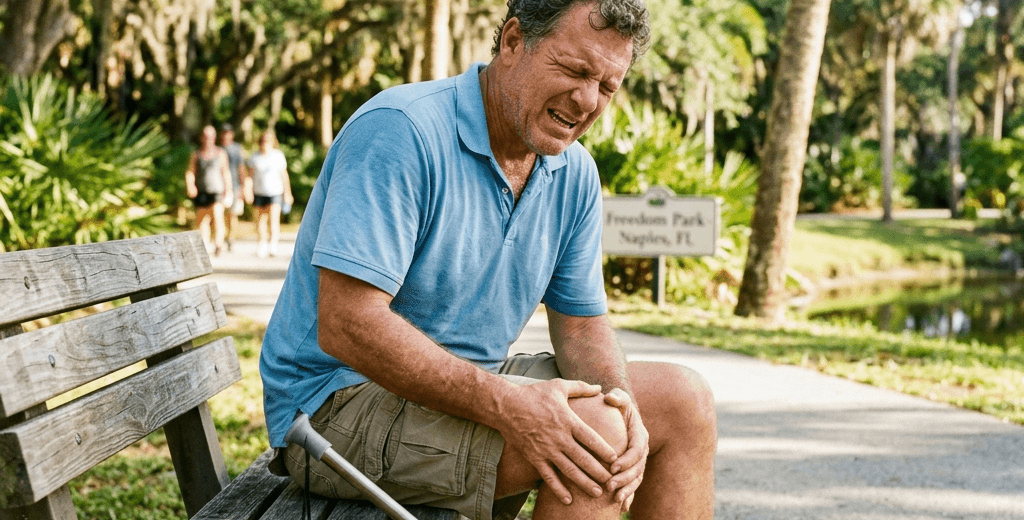
Many of us have probably heard someone with chronic joint pain mention how they can feel the weather changing. They may say they can “feel the rain coming”. It’s true that many people often associate sore joints with cold, rainy weather. These same people may think that warm weather can make sore joints feel better. In truth, though, joint pain can actually get worse this time of year. It’s common for knee pain to flare up when people increase their physical activity after a less active winter.
This increased activity itself can be a contributor to knee pain, but there are other factors. There are physical and biomechanical issues that can show up in warmer months, and many of these are often overlooked.
Why Knee Pain Can Get Worse in Warmer Weather
One obvious reason for increased knee pain in warmer months is as simple as people naturally becoming more active in spring and summer. This is especially true up north, but even in Florida spring tends to bring more people outside for outdoor activities: walking, running, sports, yard work, etc. This sudden increase in activity can overload joints that are not properly conditioned for it. Other reasons for warm weather knee pain, though, are less obvious, including:
- Swelling and Inflammation
Heat can contribute to increased fluid retention and mild swelling in the joints. This may be particularly true for individuals with pre-existing conditions like arthritis. - Dehydration
Warmer weather typically means more sweating. Without proper hydration, joints can become less lubricated and more prone to friction and discomfort. - Footwear Changes
This is easy to overlook, but if warm weather has you switching from more supportive footwear to more time in flip-flops and sandals, you may be suddenly putting more stress on your knees as they compensate for the lack of ankle support.
Also consider something as simple as the fact that hot weather can make you uncomfortable, and feeling uncomfortable can make you more sensitive to pain. A minor nagging discomfort can become an intolerable pain if the rest of your body is feeling miserable.
While the science linking joint pain directly to weather changes is complex and often inconclusive, the anecdotal evidence is overwhelming. As more people become interested in the topic, more research is being done to investigate potential links between weather and joint pain, including changes in temperature, humidity, and/or barometric pressure.
What Can You Do About It?
There’s no point in trying to control the weather, but there are some things you can do to protect your knees from the potential problems that come from increased temperatures. If you want to keep your knees pain-free and functioning at their best this spring and summer:
- Ease Into Activity
Don’t jump right into the same intensity of work you may have done last year. Ease yourself into it, gradually increasing intensity and duration over time. Also, don’t forget to rest. - Stay Hydrated
This tip is simple, but easy to overlook. Hydration helps to maintain joint lubrication and muscle function. This is especially important in the Florida heat. - Wear Supportive Footwear
Choose shoes that provide arch support and absorb impact. Limit your use of flip-flops and sandals to times when you plan to be less active. - Strengthen the Right Muscles
Strengthening the muscles that support your knees can play a big role in protecting them, including quads, hamstrings, and glutes. - Don’t Ignore Early Warning Signs
If you start experiencing pain, and it persists or recurs, or if gets worse with activity or keeps you from performing basic daily tasks, don’t hesitate to seek out medical help. The sooner, the better.
Staying active is an important part of a healthy life, and you don’t want to let the fear of pain or injury keep you from it. Be smart, be safe, and take advantage of your opportunities to get outside and get active.
The Bottom Line: Warmer Weather May Put Extra Stress on Your Knees, But Don’t Let It Stop You
Whether it’s due to the sudden increase in activity, the possibility of increased inflammation or dehydration, or any combination of these or other factors, the spring and summer weather can put extra stress on your knees. It’s important to remember, though, that if you protect yourself it doesn’t have to stop you from getting and staying active.
Don’t do too much too fast. Stay hydrated. Wear proper footwear. Keep your legs strong. Listen to your body and get help when you need it.
Physical Therapy Can Help
If you find yourself dealing with knee pain that recurs or worsens with activity, or if the pain keeps you from doing basic daily tasks, reach out to a qualified physical therapist as soon as possible. A PT can help identify the root cause of the pain and develop a personalized treatment plan tailored to your exact needs and abilities to help you recover quickly and safely and get back to doing what you love.
Don’t try to “push through” the pain and don’t wait to deal with it later. The sooner you start working on treating the pain, improving joint mobility, and strengthening the surrounding muscles, the sooner you’ll be pain-free and active again. Early intervention almost always means faster and better outcomes, so don’t hesitate to take the first step.


