
Our hips are a central part of so much of what we do every day that it’s easy to take them for granted. Hip rotation and mobility affect our walking, sitting, bending, balancing, and so much more. This becomes obvious as soon as we experience some pain or stiffness in our hips. Suddenly, many simple tasks and activities can become excruciating, if not impossible.
Healthy hips with healthy rotation and mobility make our lives much more productive and enjoyable. It’s worth investing some time into building and maintaining the healthiest hips possible.
What Hip Rotation Actually Is (In Plain English)
Our hips contain very large ball-and-socket joints that connect our upper and lower bodies. They must move freely in different ways to help us do the many things we do each day. “Hip rotation” is how we describe these movements. There are two main types of hip rotation – internal rotation and external rotation:
Internal Rotation – Internal rotation describes the way your hips move when you turn your knees inward. This can happen when you’re stepping out of a car, swinging a golf club, or just putting on a pair of pants.
External Rotation –External rotation describes the way your hips move when you turn your knees outward. This can happen when you’re crossing your legs, kicking a soccer ball, or putting on your socks and shoes.
When we refer to hip rotation, we are referring to the way your thigh bones twists in relation to your pelvis. Healthy hip rotation and mobility are essential to keeping your life active and productive.
Why Hip Rotation and Mobility Matter for Everyday Life
Hip rotation and mobility play such an important role in our everyday lives that it’s worth digging a little deeper to investigate exactly how essential they are. There are many good reasons to care about and invest in healthy hips, including:
- Better Walking and Balance
Hip rotation keeps your gait smooth and efficient. Poor mobility can lead to awkward steps, shorter stride, or increased risk of tripping. - Easier Bending, Squatting, and Lifting
This affects everyday tasks like picking up groceries, playing with kids, or gardening. Tight hips force the lower back to work overtime, leading to discomfort and fatigue. - Less Stress on your Knees and Lower Back
When hips don’t move well, surrounding joints compensate. This can contribute to knee pain, lumbar stiffness, or overuse injuries. - Prevention of Common Injuries
Hip mobility supports core stability and reduces strain in movements. Healthy, functional hips can help you avoid overuse injuries in other body parts, and injuries from stumbling or falling.
You can easily think of many scenarios in which your hips are playing a role. Even if your hips are not at the top of your mind every day, they certainly will be as soon as you lose that rotation and mobility that we all rely on for so much of our everyday lives.
How to Maintain Healthy Hips
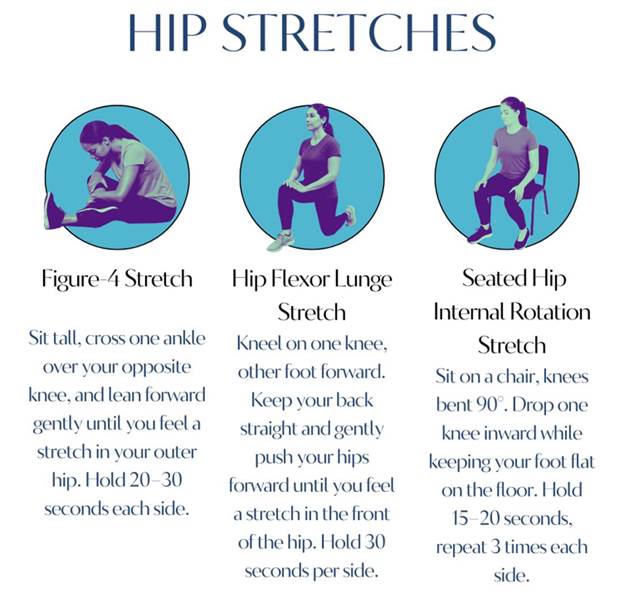
Since your hips are part of your body, doing what you can to maintain your overall health is important. Get plenty of sleep, eat a heathy diet, and exercise regularly. For your hips specifically, you should consider incorporating some hip stretches and exercises into your regular exercise routine. Simple stretches like a hip flexor lunge or figure-4 stretch can be performed in a couple of minutes and go a long way toward helping you keep your hips healthy and mobile.
Signs That Your Hip Mobility May Be Limited
If you have questions about your current hip health, there are some basic signs you can look for to see if your hip mobility may already be limited. For instance, you may feel some stiffness when getting in or out of a car. You may have trouble crossing one leg over the other. You may experience wobbling or shifting during squats or lunges. You may feel like your lower back is doing most of the work when bending or rotating.
Any of these can be a signal that you may want to reach out to a professional like a physical therapist to have your hips evaluated. There are also some simple tests you can try at home to evaluate your hip health. If you want to try these, just be sure that safety is your first priority.
Some Simple Tests to Try at Home:
- Seated Hip Rotation Check
Sit upright. Carefully rotate the lower leg inward and outward. Note differences between sides or areas of stiffness. - Figure-4 (Cross-Leg) Check
Can you rest your ankle on the opposite knee comfortably? Do you feel excessive tightness? - Standing Rotation Test
Stand tall and rotate your body left/right. Notice if the hips rotate naturally or the back compensates.
These tests are obviously no substitute for a professional evaluation, but they can give you an idea of whether you have hip rotation or mobility issues that you should investigate. If you want a professional opinion, a good place to start is with a qualified physical therapist. They can provide you a thorough examination and diagnose any potential causes of concern. They can also create a personalized exercise program based on your condition and abilities, allowing you to work on building the strong healthy hips you need to live a long, independent, and active life.


